Home Blog Page 17

Where Beauty Meets Bacchus

0

The 101 Cafe in Oceanside, southern California, is a shrine to the Pacific Coast Highway, America’s most beautiful drive, which stretches almost 2,000 miles ahead of us. If you want a Highway 101 coffee mug, baseball cap or bumper sticker, this is the place to buy it. They do a pretty good coffee and ice cream, too. The guy at the next table hears where we are headed.

“When you get to Cambria, you must, must drive inland through Paso Robles wine country. Take the Santa Rosa Creek Road, a back road that goes through the wineries. It’s gorgeous,” he says.

Well, what’s a road trip for if you can’t make diversions? Three hundred miles later we’re in Cambria, on California’s Central Coast, almost midway between Los Angeles and San Francisco. We’ve checked out Hearst Castle, the overwhelmingly grand former home of William Randolph Hearst, and visited Piedras Blancas Beach, home to 17,000 elephant seals, so we take the stranger’s enthusiastic advice. And that’s when we fall in love with Paso Robles wine country.

Save Sonoma, much further north, for another visit and let the crowds have the more commercialised Napa Valley. A drive through Paso Robles lifts the spirits before you’ve even raised a glass at one of the 220-plus vineyards that combine Bacchus with the region’s natural beauty. Roads with names like Jack Creek Road, Chimney Rock Road and, of course, Vineyard Drive, all weave and wind their way through gently curving hills and fields which, even in spring, are as lushly green as on an English summer’s day. Horses and cattle graze peacefully. We crawl carefully around a zig-zag bend and are plunged into a shady woodland where Spanish moss hangs from the trees and we brake hard to spare the life of a suicidal squirrel that scampers across the road.

We sometimes have to brake hard to find the vineyards too, as the roads can curve suddenly and, if you drive by, it could be another mile before you can turn around. At the Jada Vineyard (www.jadavineyard.com) we drive through their vines to the Tasting Room, where they match each wine with a cheese.

WALNUTS AND ALMONDS

“First,” says the girl with the bottles, “I want you to try this smoked cheddar from France, which we’ve paired with our flagship Rhône-style wine, Hell’s Kitchen. You enjoying your visit?” We say we’re impressed by the scenery as well as the wine. “We have lots of variety here, with walnuts and almond trees, which were planted to take the place of the vines that were ripped out during Prohibition.”

Our next winery, the Adelaida Cellars (www.adelaida.com), is surrounded by 600 acres of those walnut trees. Here we sip our way through chardonnay, pinot noir (which is rare in this region), zinfandel, a syrah, a Rhône-style red, a reserve cabernet and a viognier.

“The vineyard is at 2000ft elevation,” we’re told by the woman doing the pouring, “and the soil type is distinctive. It’s rare in California but they have it in Burgundy and the Rhône. The elevation is the only difference. The cold Pacific air makes it cool in the afternoons, which is good in summer for the grapes.”

“The climate of Paso Robles is peculiar,” we’re told by Brian, our tour guide at the JUSTIN Vineyards (www.justinwine.com), where we’re staying the night. “There are many different micro-climates, which is why you get such variety in the wines. One day we had a record high of 118 degrees, but on the very same day we had a record low of 52 degrees. It can make wine-making challenging.”

MASTER SOMMELIER

One way the JUSTIN Vineyards faces the challenge is by employing a Master Sommelier, one of fewer than 200 in the world. Despite having only four rooms, they also maintain a restaurant, Deborah’s Room, where the food rivalled any Michelin-starred restaurants we’ve eaten at in Europe. It began with an amuse-bouche which combined scallops, pork belly, petite tangerine and micro greens, and soared from there. Each course was matched with one of the distinctive JUSTIN wines, from their crisp sauvignon blanc through to their sweet and fruity, port-like dessert wine, Obtuse.
The meal and wines certainly put a dent in the credit card, but long after the dent has been straightened out, the memories still tingle the taste-buds. And besides, falling in love is never cheap.

Mike Gerrard publishes a website devoted to the Pacific Coast Highway:
www.Pacific-Coast-Highway-Travel.com

WAY TO GO

Stay on the coast in Cambria surrounded by the gorgeous gardens of the Cambria Pines Lodge (www.cambriapineslodge.com) and take a short drive into wine country.

Stay on a vineyard like the exclusive JUST Inn (www. justinwine.com).

In town, stay in the historic Paso Robles Inn (www.pasoroblesinn.com).

Tour operators offering fly-drive tours to California include American Sky (www.americansky.co.uk); Audley Travel (www.audleytravel.com) and Key to America (www.keytoamerica.com).

For more information on Paso Robles, visit www.travelpaso.com.

Weird Fast Food from the UK and Around the World

0

Whether you’re travelling around the UK or going abroad, I’d always encourage you to try the local cuisine.

But no matter how much of a cultured palette you have, you’ll probably get a hankering for fast food now and again while you’re on your travels.

After all, it’s quick, cheap and even though it’s bad for you, it’s blooming delicious.

But hey, don’t just head for your nearest McDonalds or Burger King.

Fast food can still be a local speciality, so here’s my guide to the weirdest and most wonderful fast food from the UK and around the world.

Read on and you’ll even find out where you can get pizza from a vending machine.

Parmo, North East England

Never heard of a parmo? Well then you’ve never been to a fast food joint in the North East.

It’s chicken topped with Béchamel sauce and melted cheese, served with chippy chips.

I’ll admit, I’ve never had one but I am intrigued.

Pea wet, Wigan

I only live a few miles from Wigan but I was still gobsmacked when my boyfriend told me about one of their local specialities – pea wet.

Apparently, the best way to explain it is ‘mushy peas without the peas.’

It’s the juice from the peas that can be drizzled over your pie or fish and chips.

You may think ‘what’s the point? why not just have mushy peas?’ but don’t knock it til you’ve tried it.

Battered Mars Bar, Scotland

From a humble chocolate bar to the stuff of legend, Scotland has become notorious for this battered treat.

As far as foods go, they’re as divisive as Marmite – you either love them or you hate them – but if you pass a chippy in Scotland you have to try one.

Crunchy on the outside and mouth-wateringly melty and chocolately on the inside, they’ll either be the best thing you’ve ever tasted or the worst.

Turkish pizza (lamahcun), Germany

Forget kebabs, when I lived in Germany for a year Turkish pizza was my fast food of choice.

It’s a pizza cooked with tomato sauce and minced meat on top, and then topped with salad and rolled up like a Swiss roll.

I had one on the very first day I arrived in Germany and I’ve been dreaming about them ever since.

Poutine, Canada

It’s easy to think that North American fast food is all burgers, fries and nachos but if you head to the Great White North, make sure you get your hands on a portion of poutine.

It’s Canada’s pride and joy and a bit like our chips and gravy.

The only difference is it’s topped with cheese curds. It doesn’t look particularly appetising but thousands of Canadians will beg to differ.

Currywurst, Germany

Not many Brits have tried this German fast food staple but if you’re heading to over Deutschland this year, I’d strongly recommend it.

If anything, because it’s as dirt cheap as it is tasty.

This sausage in curry sauce is usually served with a bread roll to lap up the sauce and it’s a lovely way to warm yourself up at a Christmas market.

Pizza from a vending machine, France

Now, I always thought the French prided themselves on their fine cuisine.

Which is why I was so surprised when I came across a vending machine that served pizza.

You simply put in your 8 euro and 10 minutes later your pizza (that has been cooked at a restaurant earlier in the day) is ready to eat.

As far as frozen pizza goes, this one was pretty nice.

The weirdest part was that it had potato on it, but hey, each to their own.

Obruni

0

Obruni. It is a Twi word meaning “outsider,” “foreigner,” me. It is commonly used in Ghana and while it does not carry a negative connotation, it definitely reminds you you’re not from these parts. I  most certainly was not. Being a six-foot tall California kid made me stand out in a country where there were still people who hadn’t encountered a white person before. As I set foot out of Kotoka International Airport, I realized very quickly what it meant to be an Obruni.

Everything I had read and heard about Ghana could not really prepare me for the reality of it. There were unfamiliar noises, hand gestures, the unique use of car horns as turn signals, and above all the red dirt that made things look so surreal from my perspective. Even Ghanaian English sounded like a foreign language to me. Especially since it escaped the lips of the crowd of men offering to carry my bags for “small money.” I couldn’t feel further from home.

I had traveled to Ghana for several reasons. It offered me a chance to practice photojournalism outside of Eugene, Oregon (a town that, because of it’s university’s robust journalism school, had been mined of almost every decent story imaginable). Ghana also gave me a chance to submerse myself into a culture completely foreign to me, which would feed my travel obsession.

Ghana is often referred to as “Africa for beginners.” I never really understood that reference. Like I was going to dip my toes into the African experience in Ghana, then swim in the shallow end that is Ethiopia and finally dive head-first into the deep end of Sudan or some such nonsense. However, my experiences with various elements of Ghanaian culture were more akin to being thrown into the deep end of the ocean than dipping a toe into the shallow end of a pool. As a master’s student at the School of Journalism and Communication at the University of Oregon, my last assignment was to intern as a photojournalist for the Daily Guide newspaper in Accra, Ghana.

Since the internship program was sponsored by the university, several undergraduate companions shared a large house with me near the University of Ghana. We were a little concerned about what the living conditions would be like, but things were much nicer than I had expected. The house was in good repair, it was in a small complex with a wall and security guard and had a graded dirt road that connected with one of the main roads into Accra. A street to the east of us had plenty of stalls where we could buy necessities. A western-style mall was only a short taxi ride away if we were craving a shopping experience closer to what we were used to.

The only major differences I noticed about our living arrangement early on was the lack of hot water, laundry machines and the fact that our cooking fuel  came from a small propane bottle on the back porch. Luckily the cold showers were easy to adapt to as the humidity was intense. Adapting to a new laundry routine took a little more effort. Washing each piece by hand in the sink took much longer and had to be added into the daily schedule. To save extra time and frustration, I decided to avoid the propane tank and the kitchen and try local food from nearby vendors.

Our first days were marked by a tour of the city, meeting our new co-workers and learning the best ways to get around Accra. Accra was this mix of old-world open markets and new modern construction. A brand new highway had been built with American assistance. A KFC and shopping mall stood only a kilometer from an open air market and mini-bus hub. Compact streets dating back to the colonial era were clogged with people. My favorite part was by far the neighborhood of Nima, where the offices of the Daily Guide were located. It was one of the poorer neighborhoods in Accra and one of the busiest. Chinese and American investment had made Accra’s downtown a fairly modern area, but in Nima I was able to see what Accra looked like before foreign dollars poured in. The neighborhood also had a diversity of cultures, including muslim families from the North as well as those who kept strong ties to Ashanti and Ghan traditions. These were just a few of the micro-cultures in Ghana, but I wound up meeting many individuals from other cultural groups that call Ghana home.

People often forget most African nations’ borders were arbitrarily drawn by European leaders when they descended on the continent to exploit its resources. The indigenous cultures of the Gold Coast are arranged more by climate bands going south from the ocean, through a lush central zone then to the arid northern regions. But the borders drawn up by the colonials cut the coast up in sections going east to west. This meant that ancient empires like the Ashanti were divided by relatively new borders and the existing cultural groups were forced to mingle with each other.

These cultures were all thriving just outside my window at the Daily Guide and I was chomping at the bit to go out and learn more about them. The fact is the whole experience of working in Ghana left quite an impression on me and I could probably write a small book about it. But since I am a photographer, and happen to be the co-owner of Immersion Travel Magazine LLC, I thought it would be best to share all of it in a new series of articles. I hope you enjoy following me through these exciting, humbling and unforgettable experiences as well as the photos that came out of it.

One Kick Ass Road Trip Through the South of France

0
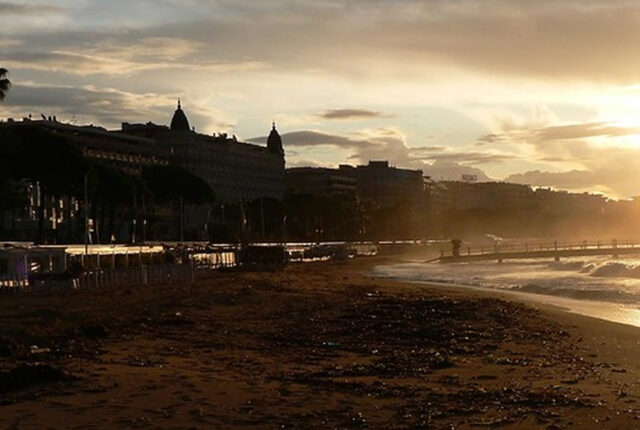
Cannes

7 days, 6 friends and 1 kick ass road trip through the South of France!
Bienvenue! Je suis perdu. Je m’appelle Mia. Voulez-vous coucher…no, no wrong phrase.

I am an adventure lover so sometimes I take chances, get my car on the road and make an unplanned trip become an awesome experience. That’s exactly what I did when I decided to taste the French vibe again through a seven days road trip through the south of France. Here’s how we did it and how you can do it too.

Although I have been to France quite a few times, Paris is one of those cities I can always get back to. It’s the city where friends, architecture and culture make you believe there’s so many things to learn that you should definitely try to get the most out of it, no matter how tired you are.

So I started with convincing two friends in Paris to join me, charged my batteries, hired a car, bought some reasonably warm clothes and we started off the adventure that is now on my top five list of things I’ve done in the past 10 years.

How to make the best of a French road trip

We wanted to experience both cities and countryside so we drove all the way through to Lyon, stopped there for one night, where people have recommended us to go to Saint Etienne.

The challenge of being on the road with just a map and without a fixed itinerary is what I believe makes people who travel adventurers and if you sometimes like being more like that, you’ll see things start happening for a reason.

In Saint Etienne we went to La Rotonde, a place to go if you’re passionate about science and art. This is where Sainte-Croix-en-Jarez Monastery and Museum of Modern Arts gave us a bit of both.

On our way from one to another, we made a new friend Pierre.

He was from Saint Juste Saint Rambert. He was heading back to his village and yes, you got it, this is how we sorted our next destination!

Getting with the locals in Saint Juste Saint Rambert

That was a fantastic chance for us to get to know more about the French family life and values.

Pierre had a great family with two beautiful kids. He moved there to get away from the city life a few years ago and still thinks that the village offers him what he always wanted – to work with small communities on cultural projects and contribute to communities’ development around the world.

Things to do in a small French village: camp fire and family barbecues, tree climbing and a short trip with Pierre’s private helicopter.

Easy enough to do, maybe except the helicopter part, but it’s worth a shot at the rest.

South is the way: Avignon

Our way to the south continued with Avignon.

The city has fantastic scenery and stories dating back in the 14th century. You can read the story of the bridge, the song and some other practical info on Marvellous Provence.

If you’re not familiar with those, you should go on a walking tour. It was one of the best ones I did as we ended up dancing on the Avignon Bridge and learning the famous “Sur le Pont d’Avignon” (On the Avignon Bridge) and the Saint Bénézet legend.

We looked like this guy:

The funny thing is that I have never imagined myself doing this in a completely new city, on a song in French that I actually got to sing all the way to Marseille and Nice.

Even if you’re not a road trip type of person, I can guarantee that no story would ever convince you that this is exciting.

You have to live it!

Unplanned, unforeseen and in the moment!

And as long as you have the right friends with you, it is a brilliant way to get some adventure in your life.

Stuck on the road to Cannes

So my next challenge was to find my way around toward Nice and Cannes. Driving is one of my passions and getting lost on the coast of France was probably the tipping point of our road trip experience.

We were left without fuel and this made it even funnier. Staying on the side of the road with an empty bottle was the first thing that came to our minds so we’ve done it! Figured if it works in movies it can work for us too.

Music on with funny moves and within one hour we got the fuel we needed to get to Cannes. We spent the night in our car, as it was too late to continue driving, so we even got to explore Cannes by night.

As you already know, Cannes is a city where when Cannes Film Festival is on, high-class, fashionable outfits are all around you, not to mention red carpets and famous actors walking past.

Lesson learned: Have a posh dress on every road trip through France, just in case you get to see Tom Cruise and want to take pictures without wearing your travel jumpsuit :)

Isn’t this Nice! Get it? Get it?

In Nice we were lucky enough to have some friends host us for the last two nights. It was the time and place to go for drinks, bars and great food and most importantly, to get some sun on the beach while sipping a brilliant cocktail along with some really good French music.

For more on the bars there is a great article on the nightlife in Nice by the Telegraph. Worth a read if you want to be prepared. We winged it and went to Le Ghost and La Suite. Not overly priced but you are in Nice so be prepared.

Would I do it again?

My experience on the road in South of France was filled with great stories, people and places that could not be captured by a camera.

Both sides of the trip – Saint Just Saint Rambert and Saint Etienne, as well as Nice and Cannes have offered us both the city and countryside vibe along with the history and landscape of the places you can see while driving through.

It is definitely an itinerary to remember if you’re planning a road trip to south of France. It is something that must be done.

All in all, don’t plan in detail, just make sure you’ve got your friends, a car, good mood, great music and be ready to feel the adventure! So yes, I would do it again a million times over.

Have you danced on the Avignon Bridge? Or have you found any other adventures worth doing on a road trip?

Don’t be shy and let me know in the comments. It’s easy as well.

Extras

On every road trip you need a kick ass playlist so make yours before departure. You have plenty of French songs to choose from here.

We were lucky and didn’t pay for accommodation but for those that don’t have that I suggest to look at homestay.com where you can pay as little as £28 per room per night with breakfast included for an apartment near the sea for Nice.

Alternatively, check out airbnb.com to rent an apartment. You might end up going for a combination of both.

I am usually a hostel fan but we were six and if you are a big group I find the above two options work best in terms of price and comfort.

We got a car from Car Hire Market and read a few of the posts on their blog to see how they are as a brand. Everything was sound and Talon from www.1dad1kid.com actually wrote for them so it’s defo worth checking out. You can read his post here and see his itinerary of a road trip in France.

Food wise, we cooked a bit and/or were fed by friends. #winner for our pockets.

We all know this type of road trip is not budget friendly but you can make it if you have the right info.

If you have any additional advice on how to not spend a lot and sell a liver to do this trip, I would love to hear from you in the comments.

When in Prague: Important Things to Know

0
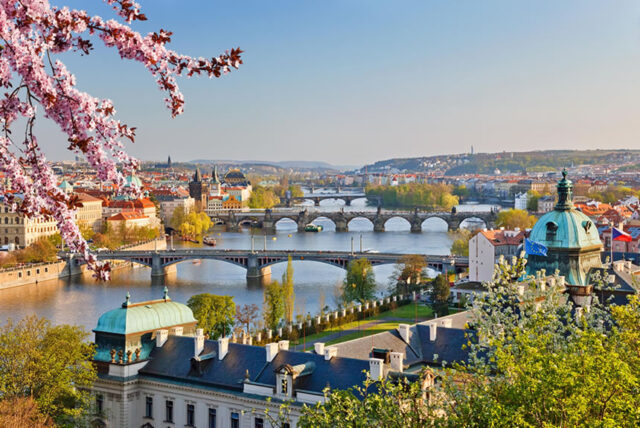
Prague at Sunset

You know what people say about Prague – that is one of the most romantic cities in the world, that its architecture will invite you into a world of fantasy, that the cultural activities are endless and the shopping is unmatched , that the beer is delicious and the parties unforgettable and most of all cheap. Now if you are waiting for me to deny any of these statements you’re going to wait for a long time. Prague is all of the above and more.

The Accommodation

I found this amazing offer on Hostelbookers.com for Plus Prague Hostel that was about £3 a night. At this price you expect no doors to your room, no bathroom and for it to be situated in the worst area of Prague. It was completely the opposite. It was so clean and nice you couldn’t believe it. I was in the girls’ area in a six bed room with an en-suite bathroom and had access to their sauna, pool and free laundry cleaning service. Bloody awesome I say.

Receptionists were so helpful and patient with me. As this trip was more about exploring the area once I am there, I didn’t really have a plan from the get-go and found that asking the locals for recommendations is the best way to find top places in each city.

Only problem is that I am the worst person in the world with directions and maps and I got lost every time for the first four days when I tried to discover where Charles Bridge is. Yes, I am THAT bad. On the plus side, I uncovered some cool things to see and I now know all the streets and shortcuts in the Prague centre area.

The only problem I found with Plus Prague Hostel was the Wi-Fi. There was Wi-Fi only in the lounge area and it was a bit slow at times. Not a major issue for most people but still a small glitch in the system.

It wasn’t situated in the heart of Prague but the tram was 5 min walking distance and the metro 7min away. Very good connections to the city centre and even a night tram that took you straight to the hostel. And for the price I paid, I say staying there was the best decision.

What I absolutely adored about the hostel was the directions they gave me to get to there. It was so detailed that not even I could get lost. Absolutely perfect and a high-five for that! Here’s how the guide looks like on their site so that you can see for yourself: http://www.plushostels.com/plusprague#gettingthere

The food

I make a point of whatever city/country I am in, to try the local traditional dish. And Prague was no exception. I had Svíčková na smetaně – sweet version of Goulash, Utopence – pickled sausages and Vepřoknedlozelo – some kind of pork dumplings (I wrote these down from the menu, don’t worry I still don’t know how to pronounce it) and I got a recommendation from Leah from Leah Travels  to try the Tartarski (beef tartar). When you think about it, it’s just raw meet with a raw egg and some toasted garlic bread and it doesn’t sound very appealing. But I swear I never expected it to be soooo delicious. And they also gave me a free Slivovice shot at the end.

Next to the hostel at about 10 min walking distance there was this amazing restaurant where I went with the Irish stag party (more about them in the fun part). We spent 400 Koruna for 10 people (about £14). And trust me the food was mind blowing.

The cultural part

When in Prague you are expected to do the touristy things as well. On my things to do in Prague bucket list there was:

  1. Charles Bridge
  2. The Prague Castle
  3. The old town centre (with the famous clock)
  4. Kafka’s Museum

And from the hostel recommendations:

  1. The Dali exhibiton
  2. Torture Museum and/or chocolate museum
  3. Alternative things to do in Prague – Wenceslas statue, cubic lamppost, baby TV tower, rollerblading in Ladronka Park.

As there are so many things to do and see as a tourist in Prague, I decided to write a more detailed post with the cultural side of my trip. A small Prague guide including where I’ve been, how to get there, fees and details for each of the above mentioned bucket list.

The fun part

My first four days in Prague were a bit quiet. Met two nice Italian girls that were in the same room as me and we kind off roamed around the streets together. After they left it was just me and a bunch of Russian old dudes. I swear no one spoke any English for 3 days (except me and the employees of the hostel). Main reason: it was during the week and March which means off season for the travel industry. Quiet was good for a while but by Thursday I started to go a bit coo-coo. So decided the best thing to do is go check out the pool and sauna.

And there I met the girls. Rachel, Sophie and Charis were there for four days, on a small trip from Bologna where they did their Erasmus Exchange Program. Rachel and Sophie are Australian and Charis is British, from the lovely land of Oxford. Best people I met while travelling and we are still friends five months later making plans to go to Edinburgh and Dublin this autumn. Plus, they invited me to go see them in Bologna. Which I did in June for 10 days.

With them I discovered Lucerna Music Bar. The main theme seemed to be 80s-90s video party for 100 Koruna (£3.50) entry fee. The best fun we had in years. Felt like I was 14 again. Danced till 4 am and could’ve done it till 7am. To make up for it, we went there twice. Lucerna Music Bar is in Lucerna Palace, on the right hand side of the passage that connects Vodičkova and Štěpánská streets near the historic Wenceslas Square. Cheesy music and a great night out all in all!

The Beer Museum is a must go/see/taste. The area of the pub is called Staré Město. To get there, you can take the metro to Staromestska Metro Station then walk for a bit across the Old Town Square till you reach Dlouha Street (another option might be to take the yellow line to Namesti Republiky. Or if it is easier take the 8, 14 or 26 tram to Dlouha Trida. This is the place where I fell in love with Chocolate beer. Don’t judge till you try it. I tasted about three types and then stuck to that. Super cheap as well (£3 aka 70 Koruna)!

After the two consecutive nights out (Friday and Saturday) I decided to have a quiet Sunday and just relax, catch up with some writing for the blog and get ready to leave to Bratislava in the morning. But guess what? It was Saint Patrick’s Day and there were 15 Irish guys at a stag do in the hostel. We started talking and amongst other things I told them I never properly celebrated St Patrick’s Day as something else always crumped up. After that, the pointing and shock from the group became endless. And they made it their life goal to show me how to celebrate that day. And that’s how I became (probably) the only girl that went on a stag do. I caved in under the peer pressure and went out for a third night to see how St Patrick’s Day should be celebrated. And to be fair, there was no better way to do it. They adopted me instantly and I never had so many big brothers at once. I couldn’t make a move without them keeping an eye out to see if I am alright. Great bunch of people and I know have an invitation to the wedding as well.

Needless to say I slept all the way to Bratislava on the train.

I talked a lot about Prague as it was one of the best cities I visited on this five month trip of mine. It had everything: good fun, sight-seeing, a bit of trouble (you’ll see in the guide to Prague post), loads of friends and amazing memories.

A World of Tapas: Cerveseria Catalana

0
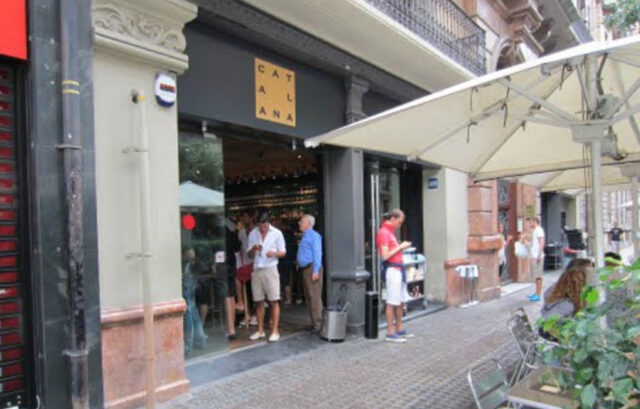
Cerveseria Catalana Barcelona

Spain’s traditional meal, tapas, is one the most delicious variety of appetizers, or snacks you can ever taste. And when in Spain, there is no excuse to not have some tapas and some Sangria.

Everywhere I’ve been in Spain I did my outmost to go to a restaurant recommended by the locals and try the tapas. So when I found myself in Barcelona, everybody was talking about Cerveseria Catalana. A bit pricey they said, but more than worth it. Let’s see the finest tapas in Barcelona.

Location

Located on Carrer de Mallorca, between Rambla de Catalunya and Balmes, the restaurant is always busy whether on season or off season it doesn’t really make a difference. I was there in late September and had to wait for 30 minutes to get a table for two so you can imagine how it must be in summer time. They take reservations but you can also turn up on the fly a grab a table too. It’s not as busy before Spanish eating hours so it may be easier to get a table straight away before 9.

Service

The place was crowded even at lunchtime but once we got the table everything moved quite fast to be fair. The waiter was polite and helpful with the selection of tapas and I was really happy that he gave recommendations on what to go for on the menu. I am not much of a wine connoisseur but my friend said it really complemented the taste of the food. Can’t really argue with that!

Food

Just one word: DELICIOUS. Everything tasted divine, from the Patatas Bravas to the Spanish Omlette and the seafood you just couldn’t get enough.

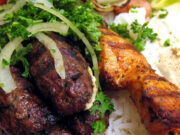
As the variety of Tapas is immense, you can either choose to put your trust in the waiter and get this:

Or go up to the bar and choose for yourself. We got this from the bar:

Another good thing that made me want to go back to Cerveseria Catalana , besides the exquisite food, is that it’s full of locals, which is always a sign of a great place.. There is no better recommendation than that: locals know their own food so why not trust them? Admittedly the price of the food was not for the budget traveller but you would be more than satisfied once you taste the food.  Considering the central position of the restaurant and the great food, I would go there again and enjoy traditional Spanish Tapas.

Insider’s Tip: If you choose to stay on the terrace, the prices are up to 15% higher because of the view (to Gaudi’s works, and the centre of Barcelona). And this applies to all restaurants for either tapas in Barcelona or anything else.

For anenchanting meal for two for 40 Euros my advice is to take a table at one of Barcelona’s finest: Cerveseria Catalana.I like to think I know my stuff when it comes to tapas because I am a tapas maniac and tried over 30 Spanish restaurants and pubs If you have any preferred Spanish place for tapas in Barcelona and any more recommendations  when I go back there ….let me know in a comment below.

Going With the Flow in Uganda

0
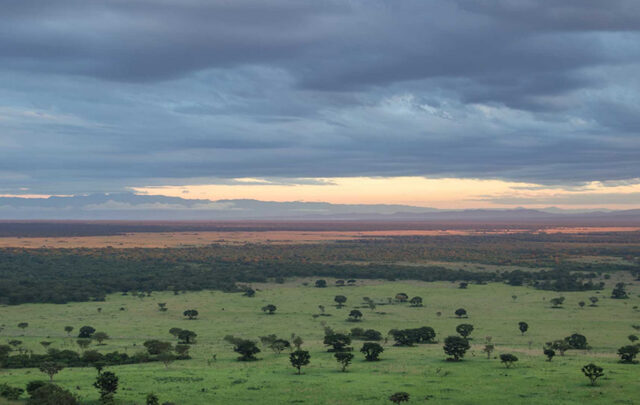
Uganda Parks

The Lonely Planet proclaimed it the top destination in 2012, yet Uganda is still a hidden pearl, writes Geoff Power.

WITH a month in Uganda, we anticipated a wide variety of accommodations. We could not have predicted, however, that this would include everything from a borrowed tent at a campsite shared with a roving hippo, to the family home of one of Idi Amin’s former cabinet ministers.

This country, in central-east Africa, cannot boast the huge national parks of, say, Kenya, Tanzania or Botswana. Nonetheless, you will see the same large mammals, but in less-crowded reserves. Furthermore, with 1,000 species, Uganda is a bird-lovers’ paradise.

It is a hidden pearl, albeit one that the Lonely Planet proclaimed its top destination in 2012.

Yoweri Museveni has been Uganda’s president since 1986. He led the country out of a horrifically violent period. Seven years after the removal of Idi Amin, Museveni ushered in democratic rule, and a period of economic growth and stability followed.

However, despite the huge improvement in tourist facilities, the country remains an unstructured delight.

There are the unorthodox transport options: taxi drivers who will sit on passengers to squeeze an extra body in; busy-but-courteous bus companies that tear along rutted dust-roads; or hop-on and hazardous boda-bodas (so named because bikes used to smuggle goods from ‘border to border’).

The adventure begins in the capital, Kampala, where ramshackle streets are crammed with traffic and people. Your first road navigation turns into a spine-tingling joust. The corrugated stands and shelters around bus and taxi depots house everything from delicious, seasonal fruits to mannequins with enlarged rears (only in Africa could the question ‘does my bum look big in this?’ demand the answer ‘yes’).

We in the West try to control the environment; in Uganda, nature flows on past — you are another animal in a fragile kingdom. Our first night in Murchison Falls National Park made that very clear. Our guide was a hapless, loveable fellow called Achilles.

The Murchison Falls National Park is Uganda’s largest protected area. To reach the eponymous waterfall, take a three-hour boat trip past pods of snorting hippos and keenly-located crocs. Upstream, the Victorian Nile surges through a narrow cleft with thunderous rage. A further half-hour hike will see you at the top of this wonderful, rocky juncture.

Afterwards, Achilles took us to a deserted campsite on the northern bank. There, we collected firewood and put up a tent. We ate chappatis and omelettes at the rangers’ lodgings, where we were the only white people (‘muzungu’). It is impossible to go a day without eggs or bananas in Uganda.

When we returned, we had to shoo away a large hippo, grazing 10 metres from where we were to sleep. Once the fire was lit, though, we felt relatively safe in our flimsy, two-man tent.

Within half an hour, the wispy clouds above turned dark and heavy, and a shattering storm raged overhead. Each time the lighting trembled, our bodies were x-rayed against the tent’s fabric, and the torrential rain snuffed the life out of our protective fire.

We could hear panicked animals wandering past. We imagined the hippo returning and using the tent as a seat for his massive behind. We did not sleep well. We were still awake when the alarm went off at 6am. To compound matters, our vehicle got stuck in the rain-churned mud and we had to hitch a lift. Despite this, we got to see elephants, giraffes, an eagle-owl, and a cool-as-cucumber leopard lounging on a distant tree.

In 2012, revenue from tourism in Uganda rose to $805m, pushing agriculture into second place. From our camp, beside the Nile, however, we caught sight of the future: oil pylons. Achilles fears that ongoing exploration in the area will disturb wildlife. “I have a fear in mind the noise will harm animals so that they are not near the road when we drive tourists past.”

Every aspect of Ugandan society was shattered by Idi Amin’s brutal regime, yet its people are a joy: both warm and welcoming.

And, like the economy, the wildlife has made a remarkable recovery. Visitors have the opportunity to stand next to mountain gorillas, catch sight of prehistoric shoebills, sleep next to countless crater lakes, and climb Africa’s tallest mountain range.

Nonetheless, regional instability remains a concern. During our stay in the Fort Portal region, the Allied Democratic Forces overran a town in the nearby Democratic Republic of the Congo, causing a flood of refugees from that country to spill into Uganda.

Professor Edward Rugumayo lives in Fort Portal with his wife, Foibe, and one of their five grown-up children, Edgar. Rugumayo’s first foray into politics was with Idi Amin’s government, in 1971. The professor, made minister for education, resigned in 1973, when he realised what Amin was doing to his country. Rugumayo was forced into exile.

When we booked accommodation at the guest-house, Eriiba (meaning ‘Dove’), we had no idea that we were entering the home of such a prominent man. Sitting at the breakfast table proved a rousing experience. On the television set, there was a photo of Rugumayo with Nelson Mandela, from the professor’s time as Uganda’s ambassador to South Africa.

As mentor to Museveni, Rugumayo believes that a sensitive balance can be struck that sanctions oil development, yet preserves Uganda’s vital wildlife. He anticipates further investment in infrastructure, with a broad sweep of accommodation. “Big hotels do not benefit the ordinary people,” he says.

His son, Edgar, is contemplating a career in politics. “We are surrounded by hostile neighbours,” he says, grimly. “The only one not hostile is Tanzania. When your neighbour’s house catches fire, you are not going to be immune.”

During your stay, you will see your money directly benefiting locals. Strong eco-tourism credentials abound and there are many rewarding projects, such as the Bigodi Wetland Sanctuary, where you can see up to eight primate species, or guesthouses, such as Lake Mutanda Eco-Community Centre, with its stilted, lopsided cabins, managed by the wonderful and dexterous do-it-all, Deus.

Our highlight was a three-day hike in the Rwenzori Mountains. We stayed at the Rwenzori Unique Eco-Tourism Campsite, where we ate with Elisha Mutungwanda and family, of the Bakonjo tribe — expect drop-pit toilet, a watering-can shower, and stunning views across lush, forest valleys.

Everything served up to us during our stay was cultivated within 100m of Elisha’s home; the only items purchased were salt and cooking oil.

We ate African Black Nightshade, groundnut sauce, organic honey, tropical fruit, and prodigious amounts of matoke — a dish made with cooked banana. And we had fabulous herbal teas served to us.

We also had potatoes. In Uganda, they are commonly known as ‘Irish potatoes’; the missionaries introduced them to the region in the 19th century. If you are Irish and need to explain to Ugandans where Ireland is, don’t bother saying U2 or Roy Keane, just say “Irish — you know, like the potatoes”.

Flights

Geoff Power travelled with Turkish Airlines from Dublin to Entebbe, via Istanbul. Return flights with lastminute.com, €690

Activities

* Chimp tracking at Budongo Forest, in Murchison Falls National Park, at Kibale Forest National Park, or at Kyambura Gorge, in Queen Elizabeth National Park. See www.ugandawildlife.org for details.

* Hike the Rwenzori Mountains (right) with Kabarole Tours, a locally-run, eco-tourism tour and safari company ( www.kabaroletours.com ). Ph: + 256 4834 221 83, Mobile: + 256 774 057 390, or email: ktours@infocom.co.ug  or rtooro@yahoo.com

* Explore the crater lakes around Fort Portal, also with Kabarole Tours.

* Water rafting in Jinja and, whilst there, find the source of the Nile — for more details, see Nile River Explorers on www.raftafrica.com

* Bigodi Wetland Sanctuary, a good example of conservation and tourism working at local level — see www.bigodi-tourism.org

* Do a walking safari at dawn, accompanied by a ranger, at Lake Mburo National Park — www.ugandawildlife.org  for details.

* See abundant wildlife at close quarters along the Kazinga Channel, in Queen Elizabeth National Park — www.ugandawildlife.org  for details.

To see/shop

* Nommo National Art Gallery, in a converted colonial residence on Victoria Street, Kampala

* ‘1000 Cups Coffee House’, Buganda Road, Kampala

* Crafts Market/Village, behind the National Theatre, Kampala

Accommodation

* Queen Elizabeth Bush Lodge ( www.naturelodges.biz , e: booking@naturelodges.biz ). The Bush Lodge is next to the Kazinga Channel but technically outside the boundaries of the Queen Elizabeth National Park. Consequently, you do not have to pay an additional park tariff to stay there.

* Arcadia Cottages, Lake Mburo National Park ( www.arcadiacottages.net )

* Eriiba Guesthouse, Fort Portal. A B&B with two rooms, ph: +256 777 635333, +256 772 451662

* RuwenZori View Guesthouse, Fort Portal ( www.ruwenzoriview.com )

* Rwenzori Unique Eco-Tourism Campsite, ph: +256 772 986235, e: elishamutungwanda@yahoo.com

* Lake Mutanda Eco-Community Centre ( www.lakemutandacamp.com ).

3 Unexpected Things to Do in Birmingham

0

I’ll be honest – I’ve never really thought there’s much to do in Birmingham.

Yes, it’s got one of the UK’s biggest shopping centres, the Bullring, but other than that, there’s not much there right?

Wrong!

A few weeks ago I spent the day in Birmingham with one of my uni friends and our original plan was to go to Cadbury World in Bourneville – just 12 minutes on the train from Birmingham New Street.

But devastatingly, it was sold out on the day we wanted to go and we were faced with the daunting prospect of planning a day in actual Birmingham itself.

I’ll be honest, I did think we’d have to spend the day wandering around the Bullring.

But thanks a combination of frantic Googling, Foursquare and following our noses to see where a certain path led, we managed to have a surprisingly great day out.

In fact, I’ll certainly never say there’s nothing to do there ever again. Here are just a few unexpectedly cool things to do Birmingham you probably don’t even know about!

Go backstage at the BBC

Have a go at presenting the weather in front of a real green screen with a real auto-cue? Errrrr, yes please.

BBC Birmingham is just around the corner from New Street Station in a leisure complex called The Mailbox. It has attractions that the public can access for free, including the green screen, as well as a paid tour around the studios.

We were lucky enough to have the green screen to ourselves so we spent ages having a go presenting the weather, Newsround and even a nature programme.

Following an auto-cue is surprisingly difficult but it’s hard to resist taking a few pics of yourself ‘on the telly’. Trust me, this is too much fun to miss out on.

Explore the swanky canal network

Head down to the canals behind The Mailbox and you’ll be pretty surprised how nice it is down there.

It all looks like it’s been done up and it’s a great place to go for a walk and then a drink at one of the pubs afterwards.

If you like it that much you could even move into one of the stylish young professional-style apartment blocks along the canal!

Eat home-made cake at an independent cafe

Since most of my previous trips to Birmingham have been spent at the Bullring, I’ve always had the impression that most of the cafes and restaurants there were part of chains.

But I much prefer eating or drinking at places that are unique to the city you’re visiting – after all, you could be anywhere in the UK at a Nandos or a Starbucks. There’s nothing individual about them.

I recently joined Foursquare and I’ve found it to be a pretty good way to find places you’d only find otherwise by word of mouth.

Yorks Bakery Cafe

Both of us had a bit of a craving for coffee and cake so we looked up nearby coffee shops and found Yorks Bakery Café. It had good reviews and was only 0.9km away from where we were.

It turned out to be in a fairly quiet area but it was fairly busy, which is always a good sign if people will make a special effort to go there.

All the cakes were home-made and delicious and the assortment of sofas, arm chairs and tables gave the café a very laidback feel. So laidback that we stayed there for two cups of tea and extra cake.

Perfect.

So there you have it – just a few of the unexpectedly good things to do on a day trip in Birmingham. But it’s such a big city, I bet there’s more – if you’ve got any recommendations, let me know!

Climbing Kilimanjaro – How to Tackle the Beast

0
Kilimanjaro Trek

Climbing Kilimanjaro – Diary Guide and Tips

Jambo, (which is Hi in Swahili 🙂

At 6pm on day two, snuggled by my ski jacket in the tent, I decided this was as good of a time as any to start writing a diary while climbing Kilimanjaro. I made the conscious choice to climb ‘the beast’ at the beginning of last year.

The Flightathon

It all started with a proper ‘flightathon’ to get there which involved two Qatar Airways flights from Manchester through Doha to Dar es Salaam and then an internal flight from Dar is Salamander onto Kilimanjaro followed by a 45 minute taxi ride to Moshi where the hotel was.

Been there done that tip:

If your flight to Kilimanjaro isn’t included in your long haul flights, try to book a flight with FastJet (who are owned by Easy jet). The other main carrier for internal flights can be unreliable.

I stayed at the Spring Land Hotel which was surprisingly good and much needed considering the conditions for the next days. With a pool, a buffet, laundry service, TV and Wi-Fi and very friendly staff this was a great place to help prepare for the challenge ahead

Let’s get climbing Kili – Day 1

Me and my friend decided to go on the Machame route. After an hour drive to the Machame Gate we were on our way in what was a nice walking climate equivalent to a nice British spring day. This didn’t last long though. As we got deeper into the rainforest it started pouring rain.  The rain became heavier and heavier and it was now we started to realise we were not in Kansas anymore and that this would be common in our trek.

The rainforest terrain was muddy uneven and very steep in places. After 7 hours we got to Machame camp and we were soaked through despite our best efforts and preparation with waterproofs. It was at this point I started to gain an obsession for drying stuff.

Some of the more creative attempts were:

–       putting a candle under a chair and draping clothes on top of the chair

–       wrapping hand warmers in underwear

–       putting talc in hiking boots

Our main topic of conversation over dinner was to create a list of items we should have brought with us, the top ones included:

–       A rain poncho

–       A day sack rain cover

–       A wetsuit

–       Swim shorts (as a replacement for underwear)

We woke up the next morning to find that all our drying creations were a #fail. Oh the joy!

If you have any tips that helped you through your climb give a shout in the comments. Would love to find out what else I could’ve done.

Thanks to Lloyd for sharing his journey in this Guest Post series.

Climbing Kilimanjaro – Trek to the Lava Tower

0
Kilimanjaro Mountain

After rock climbing to Shira Camp (which you can read about here) I was in very much need of some sleep. But sometimes things just don’t go as planned and whilst I loved the food we had for dinner, the food didn’t really love me back which resulted in me spending the few hours that I had reserved for sleep, throwing up everything and anything. Brilliant…

So after an intensive night of snoozing and “screaming at the bushes” of around four and a half hours it was time to get on the trail again for what was supposedly the easiest day with a relatively flat trek. Let me just say it wasn’t.

The trek took eight hours including six hours up to a ridge to acclimatize to the altitude to the Lava Tower where we had lunch.

We then descended 800 metres for the last couple of hours. This was the ascent part probably as we had to scale down very steep rocky waterfalls for a start.

Since the difficult night before and the non-stop cold rain throughout, I started to have quite a few “FML” moments. The guides are great at helping you through it though. They are incredibly knowledgeable – as most do the tour to the summit twice a month, and quite funny as well! They really kept me going that’s for sure. One more thing and I don’t know if everyone else noticed but the porters are machines. They carry so much up the mountain by mainly balancing heavy bags and equipment on the top of their heads. We even saw one guy balancing a big heavy bag on his head wearing converse trainers! Best ad for Converse ever made and it definitely beats this one.

Day 4: From Baranco Wall to Base Camp

It was an early start as usual, the morning challenge was to scramble “the wall”. I’m not a morning person at the best of times so traversing across a slippery almost vertical wall with significant drops was not the start I had in mind.

As it was going to get colder later the ski jacket was out for the first time. The risk here was that if it got wet then this could provide problems for future days, and guess what: it got soaked because just like every other day it rained big time.

We stopped for lunch after about four hours which was in the mess tent at a half way camp. It was warm and yummy and it didn’t mess up my stomach as well. Winner!

As the rain was coming down in stair rods, the guides had to get me out of the tent kicking and screaming. I was finally and reluctantly ushered out and the ascent continued for another four hours where for the last part of it we started to encounter light snow. It was a fairy-tale sight and it kinda hit me why I wanted to do this in the first place. I like to push my boundaries and see what I can achieve and this was definitely a challenge.

Barafu Camp

We arrived at base (Barafu) camp cold and wet, the mess tent wasn’t up yet so I decided to stay at the sign-in hut and sit on a bench shivering, breathing into my ski jacket to keep warm and attempting to dry out.

When I finally made it to our tent to get into some dry clothes, I frantically started to think of the best way to get my ski jacket dry for the next day. The best solution I came up with was to but it underneath a towel underneath my sleeping bag where my head was. Genius? Not really, but at least I got a good night sleep.

The (almost) final Kili Climb

At this point I thought we had another day’s trekking to go. However, our guide came into the tent and said we would start the summit climb that very night. I was half ecstatic that I didn’t have to do another days trekking before the summit and half nervous that the summit climb was in 5 hours’ time.

After eating just spaghetti (to be on the safe side) around 7:30 I managed to get about two hours sleep before we started to get ready for the summit climb.

What do you think? Did I make it to the top?

This is the third partof Lloyd’s diary guide to tackling the beast – aka: Climbing Kilimanjaro.

0FansLike
3,912FollowersFollow
0SubscribersSubscribe
- Advertisement -
Google search engine

Don't Miss