




Home Blog Page 9

Irish Country Escape
0
Irish Escape

Far from the bustle of the city, it isn’t traffic I hear when first waking, but the steady rushing of the River Sheen outside my window.

Deep in the southwest of Ireland, the emerald isle is at its most brilliant in this corner of County Kerry. In a region rich with lakes and landscapes dramatically sculpted by glaciers, there is a luxury hideaway nestled into over 300 of its own acres. As I open the curtains, the water flows under an arched bridge and tumbles down rocks, foaming white beneath me. Sheen Falls Lodge was exactly the country escape I’d been craving.

A privately owned luxury hotel since 1991, Sheen Falls was once the summer residence of the Marquis of Lansdowne. Understated luxury is evident at the Lodge, from furnishings, to classic European touches, to vintage cars and activities on the grounds. Sheen Falls boasts a library with 1,500 volumes for borrowing, an indoor heated pool and Jacuzzi with pampering spa treatments. Over the weekend I discovered the ability of the Sheen Falls staff to tailor an individual combination of all these options, along with their variety of outdoor activities.

The tranquility of my country escape began before my arrival to Sheen Falls. Driving through Killarney, tall pines lined the roads, and through branches a wide lake was shimmering in the afternoon sunlight. This unspoiled environment has long drawn travelers to the region. Continuing along the mountain pass towards Kenmare, sweeping views around each bend of the mountain encouraged me to take the journey slowly. The crisp, clean air began to relax me before I even reached the gates of my 5 star hideaway.

Crossing a suspension bridge where Swans were gracefully swimming below, a modest sign guided me on to the estate of Sheen Falls Lodge. The tennis court, Croquet lawn, and first spring daffodils lined the winding road. A subtle fountain trickled in the center of the entrance drive, and a small Relais and Chateaux symbol was displayed proudly at the door. Greeted by a cheerful Irish accent, our bags were whisked away, and seated at reception, the smell of lilies combined with the smoky sweet scent of a wood-burning fire.

A country house style hotel, Sheen Falls is designed with elements of old-world elegance. A restaurant lounge with fireplace and views of the river serves as a comfortable meeting place, and a freshly poured pint of Guinness is never too far away at the bar, to be enjoyed in the sun lounge. As reception kindly showed us to our room, we passed the entrance to La Cascade, the renowned restaurant of Sheen Falls. With a new menu just updated for spring, we had many culinary pleasures to anticipate beyond its doors.

Sheen Falls commitment to relaxation is reflected in the generous size of every room. The rooms begin at 500 sq ft (ranging to 1,350 sq ft for the presidential suite) and each has a stunning view. My junior suite had touches of luxury everywhere, from the practical consideration of coat hooks in the entrance hall, to comfortable lounge chairs by the windows. The design of the hotel is to focus the guest in on nature, and the beauty of the river. Its steady flow was the accompaniment to dining, sleep, and an afternoon by the fire.
Leaving behind the sanctuary of our room we descended into the cool wine cellar for the nightly 6:00 tour with the in-house Sommelier, Mathieu Schmutz. Born in the Alsace region of France, Mathieu began his love affair with wine at a young age. His passion for wine-making and the pleasure of pairing it with exquisite food was evident in the way he carefully cradled the bottles like a child. With over 10,000 bottles and 950 labels, Sheen Falls has an option for every palate and price bracket.

For the wine connoisseur, Mathieu is a source of endless knowledge. Welcoming questions both general and specific, he can arrange individual wine tastings to accommodate the queries of his guests. After spending an hour in the dimly lit wine cellar discussing his range of wines, we made an appointment for a personal tasting the next afternoon. As we climbed the stairs, Matheiu carefully began to examine his rows of options, already concocting our experience.

La Cascade isn’t the only restaurant in the area known for excellence. The village of Kenmare has earned a reputation of being a culinary capital in Country Kerry. It is wise to book reservations ahead, especially for the weekend. The concierge suggested a popular choice in town, and made all of the arrangements. A quick five-minute taxi trip brought us to the door of Mulcahy’s.

The executive chef has earned praise for infusing Asian flavors into his Irish cooking. A delicate pickled ginger salad accompanied my sashimi and sushi appetizer and generous portions of side dishes were served with the fresh seafood entrees. A candelit ambiance maintained the relaxation provided by Sheen Falls. After dinner, the Lodge glowed through the trees as we approached. A smiling staff wished us a pleasant sleep, and the fire still burned lowly in wide hearth.

How To Prepare For A Disaster

0
How to Prepare for Disaster

If you look at the news, there is a very sobering realization: one of the few things we can absolutely rely on in this world are disasters—large or small, manmade or natural. There is a range of natural disasters: hurricanes, earthquakes, flooding, snowstorms, heat waves and so on. Manmade disasters can be accidental, like a house fire. Manmade disasters can also be acts of terrorism—cyber attack or bombing. There are so many types of emergencies and sometimes, unfortunately, they are impossible to avoid. However, you do have the upper hand: you have the time to make a plan.

The Plan
Your plan should encompass what to do if you have to shelter-in-place or evacuate. Sheltering-in-place involves you staying where you are, whether it be your home, office, or other location during an emergency. If you have to evacuate, it means that where you are is not safe.  Local and emergency officials, through social media, radio, and television, will advise on whether to shelter-in-place or evacuate.

The first step is to identify who is factored into your plan (you, your family, your pets). Next, do some research on what hazards have a probability of occurring where you live—a great resource is Ready.gov for the USA. For both shelter-in-place and evacuations, you will want to set up a phone tree to let loved ones know that you are safe, that way you only have to call one person. In addition, Facebook has the safety check feature to let your friends and family know that you are okay. For evacuations, you should pre-identify a location (friend’s house, family’s house, emergency shelter, etc.) and how you plan to get there (walk, drive, train, etc.) with directions.

The Supplies
Depending on the disaster, you may have days, hours, or minutes to evacuate.  You can mitigate the chaos of leaving your home or office by having a go-bag.

Your go-bag should include:

  • Food (like high-calorie protein/power bars)
  • Water
  • Cash (preferably in smaller bills—ATMs may be unavailable and people may not have change)
  • Change of clothes
  • Sensible shoes (if you are leaving the office, you may want to have a spare set of sneakers under your desk!)
  • Chargers
  • Batteries
  • Radio (preferably wind up)
  • Flashlight
  • Necessities (toiletries, medications)
  • First aid kit
  • Notebook and pens
  • Documents (i.e. a copy of your driver’s license)
  • Blanket
  • Entertainment (books, cards)

If you have a pet:

  • Food
  • Water
  • Carrier/Leash
  • Record of vaccinations
  • Toy
  • Bags/Litter
  • Medications

If you are sheltering-in-place, you will need at least three days worth of water (one gallon per person per day) and food. You may want a radio, flashlight, candles (battery is safer), spare batteries, and a first-aid kit.  Lastly, waiting at home for any emergency to end can be boring so make sure you have a book and games to keep you occupied (especially if the power goes out).

The last step is to replace your supplies on an annual basis. I go through my go-bag/shelter-in-place stash on daylight savings and replace anything that has a shelf life, like medications, water, food, and batteries.

Hopefully, you will never have to use your plan or emergency supplies.  In the event that you do, you will now have a foundation of readiness, which makes getting through and surviving a disaster less chaotic. It never hurts to have a plan!

Belmond British Pullman Train

Travel Back By Train

Travel back in time by train!

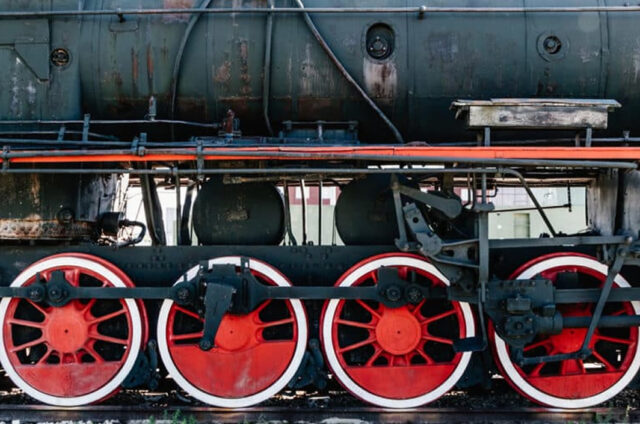
The Golden Age of Travel by Steam is one of the Belmond British Pullman Train’s most popular train trips in England. Passengers travel back in time to the 1920s to enjoy a lavish ride on the train that is led by the famed steam engine, Tornado—you’ll feel like you are in an episode of Downton Abbey! The journey begins at Victoria Station in Central London and travels through the beautiful Kent countryside before journeying through the Surrey Hills Area of Outstanding Natural Beauty and then returning to the London Victoria Station. The dining cars are decorated with 1920s-themed decor, furniture, and dinnerware.

Guests enjoy a champagne toast, followed by a delicious five-course meal, complete with chutney, cheese boards, biscuits and petite fours. A traditional English meal follows as the train snakes along the countryside. Wine, coffee, and tea also are served at your pleasure. The train’s large windows allow passengers to enjoy the scenery throughout the trip as they learn about the area’s history, including a look at some of the famous people that road on Tornado’s train through the years. This particular trip cost £395 per person and we think it is the perfect activity to do with someone who has never been to the English countryside. While the trains run all year long, weather permitting, the fall and springtime are the best times to visit, as the scenery is just gorgeous.

Belmond is a renowned travel company that operates nearly 50 river cruises, train rides, and hotels, including the Belmond La Samanna (St. Martin), Belmond Villa San Michele (Florence, Italy) and the Belmond El Encanto (Santa Barbara, California) in more than 20 countries, such as the United States, United Kingdom, Italy, and Peru. They focus on providing customers with unforgettable luxury experiences. In addition to the Golden Age of Travel by Steam, Belmond British Pullman Train offers several other exciting trips, including Murder Mystery Lunch rides, Historic Canterbury rides, Sandringham rides, Historic Bath rides, Blenheim Palace rides and more.

What to Look for in London Accommodation

0

London property is without doubt property that belongs to the elite. Buying property in London is certainly a statement of class. However, there are a few things that you should do before you actually decide to buy property and specifically an apartment. Let us look at these things.

Apartment size

Obviously, the sizes vary considerably. When deciding to buy apartments always take into perspective the sizes of different flats. If you are looking to live in London, it is best that you avoid studios since they are small and are hard to sell. By adding a little more money, you can purchase a one-bedroom apartment. In case you are just a traveler who does not really plan to stay in London, you can buy a studio where you can be staying during your time of business. This in the long run is cheaper than renting a house or a hotel room. Furthermore, your apartment will be a very good capital investment.

Research

Before purchasing a flat, it is appropriate to ask the owners about the development. You should ask questions concerning charges and restrictions, the neighbors, the recreational facilities, and the management. In case you are trying to avoid noise, you should know that a flat that has others below or above is noisier than a top floor or a ground floor flat. If you are planning to buy a flat that is not on the ground floor, ensure that there is an elevator. Ground floor apartments are susceptible to robbery and your insurance company will obviously ask for more security before they can even think of insuring your property.

Keep in mind that flats on upper floors are colder and warmer in winter and summer respectively. On the other hand, this will not be a problem as long as there are air conditioners. Therefore, before buying a flat, know exactly the floor you want.

Cost

The cost is not standard. Depending on the size, it varies. You can get a one bedroom flat or a studio from as little as thirty thousand pounds and a new two-bedroom, two-bathroom flat at three hundred thousand pounds. When it comes to popular developments, you must buy off plan even before a development is finished. In older developments, check that the cost allows you a parking space and private grounds. In newer properties, you have to pay extra in case you want your own parking or rather, garage. Cost will also vary with the location. If the location does not impress you or you see something that is out of place, you can use it to your advantage. Who knows, you may actually drive home a good bargain?

Service Charges

If you are a flat owner, you have to pay charges for the maintenance of communal areas. The charges are calculated in accordance with your share of the development. The services that you may be charged include garden maintenance, caretakers, cleaning, lift maintenance, pest control, water supply, club membership and so on. Always make sure that you know of any service charges of a London property before buying it so as to avoid any inconveniences in the future.

Cambridge – Best Things to See & Do

0

The historic city of Cambridge is home to one of England’s two great universities. And like its rival Oxford, it has colleges that date back more than 700 years and some of the great names of learning attached to it.

Built astride the River Cam, it is a city of bicycles, of art and culture, of summer days spent lazing on the banks of the river and a youthful vibe that stands in stark contrast to its venerable buildings.

Sadly, it has the ubiquitous shopping centres that make it resemble many another English town – with the same old shops and chain restaurants and cafes. And it can be very busy with holidaymakers and day-trippers if you catch it on a sunny day, everyone tripping over bikes and locals plugging any number of concerts and shows. But we can overlook all that…
Plan your travel to Cambridge by train. For car hire, book with: Budget, Alamo, Europcar or Sixt. Here are 10 things to see and do in Cambridge:

Go for a punt on the river

Punting on the Cam has been a mainstay of Cambridge life for generations. Choose to take a chauffered tour or have a go yourself, if you have a sense of balance and can cope with the traffic jams on the river on a busy weekend. You’ll get the best views of King’s College Chapel, The Wren Library at Trinity College and the Bridge of Sighs from the water. Several companies are available on the river.

The Backs

The collective name for the series of parks, gardens, bridges and paths that line the river behind the city centre colleges, The Backs are a world away from the noisy shopping streets and car park queues. As with punting, you’ll get some fine views of the historic buildings and everyday Cambridge student life amid the trees and meadows. But bear in mind that not all these green spaces are public and some can only be accessed through the colleges. There are plenty of other green spaces in the city centre, including the charmingly named Christ’s Pieces.

Take in the views from Great St Mary’s Church

The university church was build over the road from King’s College Chapel and the grand Senate House, where graduation ceremonies are held every summer. Dating from the late 15th and early 16th centuries, it has two organs and a tower offering great views of the city. You’ll have to climb 123 punishing and narrow steps to get to the top. A few minutes away is the smaller Church of St Bene’t – the oldest building left in Cambridgeshire, with a stout Saxon tower that includes ready-made holes for nesting owls – in the hope they would repay the thing by killing a few mice.

King’s College

The chapel of King’s College is one of the most recognizable buildings in the world, an extraordinary place of worship dating from the 15th and 16th centuries and one of the finest examples of Gothic architecture that you’ll find anywhere. Its historic stained glass windows and the wood and stone carving are thrilling enough but its the fan-vaulted ceiling that’s the real star of the show. The interior is divided by a dark and wonderfully carved wooden screen summounted by an organ. On display at the high altar is Rubens’ 1634 work Adoration of the Magi while some of the side chapels tell the story of the building’s construction. The building is perhaps best appreciated while listening to one of the regular concerts.

Fitzwilliam Museum

The 19th century building houses art collected by the seventh Viscount Fitzwilliam during his lifetime and which he bequeathed to his old university. The galleries are packed with works from ancient Greece and Rome, Chinese ceramics and works by the greats – Leonardo da Vinci, Titian, Rubens, Gainsborough, Constable and Picasso. The city has several other museums – dedicated to archaeology, zoology and earth sciences. The Whipple Museum of the History of Science is rather dry while the Scott Polar Research Institute hosts the Polar Museum and its collection of artefacts, journals, paintings, photographs, clothing and other materials illustrating polar exploration.

Botanic Gardens

Cambridge has a healthy collection of green spaces but Cambridge University Botanic Garden, which has been open to the public since the 1840s, is a real treat. Its 40 or so acres contain around 8,000 plant species growing outdoors and in glasshouses. It also boasts a lake, a winter garden, rock gardens and a fine array of mature trees. You’ll find it on the pedestrian route from the railway station to the city centre.

Queens’ College

Our favourite among the Cambridge colleges, Queens’ College sits in beautiful grounds by the river and dates from the 15th century. The Old Court and Cloister Court are two of the best medieval courtyards you’ll find anywhere, one with a half-timbered President’s Lodge. There’s also a tower where Dutch scholar Erasmus lived during his stay in Cambridge in the early 16th century. Cross the wooden, or mathematical, bridge for the more grounds and a modern addition to the college. Queens’ is one of the colleges that charges admission – not all do and not all open to the public all the time. If there’s one you do want to visit, check its website first to avoid disappointment. The oldest but smallest is Peterhouse, founded in 1284.

Eat fine food

The Cambridge Chop House on the corner of Kings Parade and Bene’t Street is one of our favourites in the city, with a menu of hearty and traditional English fare. Steaks, pork, suet puddings and so on mean this isn’t the place for committed vegetarians. There’s another branch, the St John Chop House, near St John’s College. Much on the menu is locally sourced.

Corpus Clock

One of the city’s weirder attractions, the Corpus Clock is a sculptural clock at the junction of Bene’t Street and Trumpington Street. Unveiled by Cambridge physicist Stephen Hawking in 2008, it has the world’s largest grasshopper escapement. Mechanically controlled, there are no computers and work and electricity is used only to power a motor that winds the mechanism and powers the blue LEDs that shine behind the slits in the clock’s face.

Take a bike tour

Why sit on a bus when you could see the city on a cycle tour? Being a university town, Cambridge is full of students on two wheels – and they can get where no bus can. Cambridge Bike Tours offers various routes depending on what you want to see and has some electric bikes if you need some help on the way.

Getting to Cambridge:

Public transport. Take the environmentally friendly option – travel by train.

For car hire in the area, try booking with: Budget, Alamo, Europcar or Sixt

5 Exotic African Parks to Visit At least Once in Your Lifetime

Africa is the best safari destination in the world. There are lots of amazing national parks where you can enjoy an African safari. Here are 10 exceptional national parks that you should not miss in while in Africa.

Bwindi Impenetrable National Park

The popular Bwindi National Park is one of the kind national parks that will give you a life time experience. It is the only park with the largest population of mountain gorillas in the whole world. The park is located south western of Uganda measuring 331 square kilometers in the mist-covered hills and biologically diverse rainforests, dating back 25,000 years.  According to most guide books, Bwindi Impenetrable Forest is one of the oldest forest and riches ecosystem in the region with different plant and animal species. The park has an estimate of over 400 mountains gorillas,350 bird species and 23 different endemic species of the Albertine rift valley and other 120 mammal species, with plant life there 400 species of plants in the misty Bwindi forest as one of the richest ecosystems in Africa.

Masai Mara National Park

Is one of the richest and most visited national parks in Kenya, the park has a record of the largest population of a pride of lions, the park is also the only one you can have the great experience witnessing the wildebeest migration during the peak season. The park lies south west of Kenya amidst savannah grasslands neighboring Serengeti national park in Tanzania. The park has a wide range of accommodation with exceptional opportunities to get up close views of mammal species including zebras, antelopes, lions, and giraffes.  The best way to view wildlife is through game drives and walks and balloon safaris.

Serengeti National Park

This is the only park with abundant wildlife species ranging from big five family and other small animal species. The park is found in Tanzania neighboring Masai- Mara where you can have an experience of the African wilder beest migration. Serengeti national park has a big concentration lions, elephants, rhinos, leopards, buffaloes, cheetahs, crocodiles, giraffes, monkeys and numerous other animals roaming about. During the dry season you will experience a migration of herds of mammal species crossing over in search of water and food. Game drives balloon safaris are always an ideal for this season as it gives you a clear view.

Kruger National Park

The Kruger National Park is one of the oldest national parks in Africa. This beautifully maintained park is visited by thousands of visitors each year as it presents everything you would want to see in an African safari and also lets you choose from award-winning lodges that easily beat many 5 star hotels in terms of their comforts and amenities as one of the finest game reserves in Africa.

Volcanoes National Park

Amidst the land of a thousand hills, there is the Volcanoes National Park Rwanda with interspersed bamboo where another population of mountain gorillas call home. Volcanoes national park is found in the heart of Rwanda. Many travelers who come to Africa come to see mountain gorilla and volcanoes is another place to be. The Volcanoes National Park is the second best option for those looking to see mountain gorillas in the wild! A gorilla permit to see the great apes costs US$1500 for a one hour session.

Other than mountain gorillas there is a lot to see like the twin lake of Burera and Burondo golden monkeys and community tours with Iby’Iwacu cultural village.

A World of Tapas: Foodie Journey Through Andalucia

0

In March I booked some holidays and did a Spanish travel marathon going through 4 cities in 4 days. It wasn’t easy, so I had to keep my strength somehow and what better way to do that then through the most delicious foods of Andalucia: their tapas.

Also, before I left, knowing how much I love Spanish tapas, Peter (Travel Unmasked) challenged me to eat 30 tapas on my trip.

Challenge Accepted! Here is the proof:

Please make note I couldn’t fill this post with pictures of all the food. It was hard enough to get these ones crammed in.

Malaga: tapas count 12

Malaga treated me with a few really yummy tapas and in all honesty I thought I will not be able to do the challenge. After only six types at dinner I was barely breathing.

But that wasn’t going to get me anywhere near to completing the challenge so we went for another round:

Before catching the train to Seville we had lunch at El Pimpi. I know this sparked a bit of debate in the comments of the post I did about the trip, but I do think the food was great for the price, service was up to standards, staff was friendly and all tables around us were filled by Spanish. That must say something shouldn’t it? Anywho, El Pimpi got us closer with five dishes:

Seville: tapas count 1

As we got to our second city on our marathon I had almost half of the tapas under my belt – and probably two extra pounds, to be able enjoy Seville with just Sangria and a shared paella.

Granada: tapas count 7

Next followed Granada with delicious patatas bravas and meatballs marinated in spicy sauce, some pickles, olives and of course, the mandatory jamon and chorizo amongst others.

La Herradura: tapas count 18

And then we got to La Herradura, a city between Malaga and Granada where all tapas are free if you get a beer or glass of wine (3 Euros each).

Yes, all of that is free. How you can not get fat in Andalusia is beyond me. I do love Spain: great food, cheap drinks and weather to die for in March. What’s not to love?

Whereas I am still praying for the rain to stop mid May in Manchester.

But here are the last tapas that helped not only complete Peter’s 30 tapas eating challenge, but over doing it as well. I am overachiever after all 🙂

Do you have any favourite tapas or tapas restaurants?

Europe, Africa and Beyond – Choosing Your Travel Plans This Year

0
Trekking in Europe

If you haven’t planned your holiday yet there’s still time whether you’re looking to travel to Europe, Africa or beyond.

GPS, Google maps and smart phones make travelling so much easier and if you don’t like organised holidays booked through travel agents, then why not do your own thing in Europe. Take your car across the Channel into France and then drive across France stopping wherever takes your fancy. GPS navigation makes light work of getting around, and you can use your smart phone and google maps to source out towns and villages, nearest ATMs, restaurants and just about everything. This is a great way to travel with the family and you could even head down for a child friendly holiday in Spain or go in the other direction towards Germany or the Netherlands.

If you’re thinking of steering clear of Europe and the Euro, then how about a trip to Africa. Morocco is a country which is very much in the limelight as a holiday destination and is a colourful and exotic place to visit. It’s got some spectacular scenery ranging from pristine beaches to snow capped mountains and deserts to lush river valleys. There’s also amazing walled medieval cities and fortresses belonging to the Berbers.  The Atlas Mountains lend themselves to some amazing hiking or you can visit Fes which is home to some stunning medersas and mosques. Marrakech is full of vibrant souks, moorish gardens and  hidden riads whilst in the south you can trek on a camel into the Sahara desert and crumbling Kasbahs.

Finally, if you’re looking to go further afield, then why not start planning for a gap year. Time spent on a gap year can be really rewarding and develop skills and personal traits which you didn’t even know you had. If you like to ski then how about becoming a ski instructor at Whistler in Canada. What could be more perfect than being paid to do something you love and getting to make lots of new friends. You could also volunteer for one of the many environmental projects taking place in third world countries. Most of these involve teaching English to children which can be good fun as well as rewarding. If you like animals and want to work with them in the future then how about volunteer work. There’s such opportunities as taking care of tigers in Thailand, rehabilitating Orangutans in Borneo and darting lions from a helicopter in South Africa.

The Importance of Cruise Insurance

0

Whether you are taking a cruise to the Caribbean, the Mediterranean or the Ffjords you may wish to protect yourself and your holiday with cruise insurance. There are many benefits to having a policy to fall back on and a policy may bring peace of mind that if the worst were to happen, you have financial security.

Insurance for cruises is unlike the traditional insurance you might take out for a typical holiday. When looking for cover you may benefit from the help and advice of a travel insurance specialist who offers cruise insurance, such as BengoTravel.

Why insurance is so important

Cruise insurance is important – without it you may end up being out of pocket by a significant amount of money if something were to go wrong. A policy may include:

  • protection against cancellation of the cruise. For instance there may be an illness in the family that means you have to cancel the cruise;
  • cover for delays by the airline;
  • protection for loss of baggage. If your bags get lost you are going to only have the clothes you are wearing and this may disrupt your plans on the cruise ship significantly;
  • illness or accident while on-board the cruise ship;
  • protection for having to be airlifted to hospital by ambulance;
  • repatriation costs if you have to be taken off the ship by air ambulance and flown to a hospital;
  • interruption of your cruise due to cancellation due to mechanical issues.

In any of the above cases you may stand to lose a significant sum of money, and/or be caused a great deal of stress and worry. Bear in mind that it typically costs many thousands of pounds if you need to be flown from the cruise ship to a hospital if you suffer illness that requires hospital treatment. Treatment itself may also add up to a large sum of money. With insurance to rely on you are at least covered for any financial losses.

Factors not covered by insurance

When choosing cruise insurance it is important to bear in mind that while a policy typically covers many factors, there are some that are not included in the policy.

Factors that may not usually be included in an insurance policy for cruises may be:

  • inclement weather. You may be able to claim for weather issues such as a hurricane that forces the cancellation or delay of your cruise, but you cannot claim for such as it raining every day during the cruise. An insurance policy doesn’t guarantee sunny weather even in the Caribbean;
  • you are not able to claim for things such as a change to the itinerary of the cruise ship. You may have been looking forward to visiting a certain port, but insurance doesn’t cover the ship being unable to dock at a specific port for whatever reason.

Optional insurance you may wish to add-on

While a standard insurance policy for a cruise typically covers a wide range of things, there is also additional insurance available that you may wish to add on.

For instance you may be able to take out cover to protect against cancellation for any reason. This may be beneficial if you are planning a world cruise on the biggest cruise ship, the Harmony of the Seas and it has cost a great deal of money.

You may also wish to add on airline accident cover, upgraded medical insurance or additional emergency evacuation. Any of these policies may be added on as extra to the standard cruise insurance policy.

Tokyo Diner

0

When it comes to authentic Japanese cuisine in London, Tokyo Diner is the place to go. This very casual diner offers a friendly atmosphere that focuses on offering delicious food and providing a great dining experience. Owner and founder Richard Hill’s love for Japanese culture and food led to the opening of this restaurant in 1992, which he opened to provide customers with an affordable, authentic Japanese dining experience—which he felt was lacking in London.

The restaurant offers a nice selection of donburi like Salmon Don, bento boxes like the Chicken Katsu Bento, soba like Zaru Soba, and curry like Katsu Curry, as well as sushi, sashimi, ramen, rice, and tofu options. Complete dinners average £13, box meals range from £15 to £20, soups and noodle dishes average between £8 and £9, and sushi dishes can range anywhere from £4 to £14. Keeping in tradition with Japanese culture, no tips are allowed when dining here.

Tokyo Diner is located at Leicester Square in Chinatown, which is less than a mile north of London. The streets throughout Chinatown have more than 70 different shops, bakeries, cafes, restaurants, and bars, the majority of which serve predominantly Asian cuisine.

Address: 2 Newport Place, Leicester Square, London WC2H 7JJ
Phone: +44 20 7287 8777

0FansLike
3,912FollowersFollow
0SubscribersSubscribe
- Advertisement -
Google search engine

Don't Miss